FASCINE
Work related project | Individual project
Case study | Regenerative Design
”What if we could design an efficient way to restore rivers in symbiosis with nature?”
This was a case study that I worked on at INDEED Innovation. The study focuses on SDG #14: Life below water.
I looked into the dangers and potential remedies for endangered river banks within this project. It highlights my findings and a possible Regenerative Design solution for a sustainable restoration that is made for for any community to utilize.

Background

The Problem | Freshwaters cover less than 1% of the Earth’s water but provide habitat for 40% of all species. Since the 1970s, global freshwater species have declined by 84% due to human impact such as concreting rivers, leaving many streams unhealthy.
Healthy Rivers | Naturally structured rivers with curves, textures, and varied flow rates prevent erosion, support habitats, and maintain ecological balance.
Restoration Technique | The faggoting technique uses biodegradable bundles of sticks (fascines) to stabilize riverbanks, narrow over-widened streams, and create habitats. Over time, planted vegetation with long root systems stabilizes soil, oxygenates the water, cools the stream, and enhances freshwater biodiversity.
Problem areas

The traditional use of fascines has several limitations. They are built and placed manually, making the process slow, labor-intensive, and heavily dependent on NGOs and volunteers. Large amounts of wood are required to restore relatively small areas, which makes the method unsuitable where wood is a limited resource. Ensuring that all wood is free from rot, disease, splits, and insect damage is difficult, reducing reliability. In addition, synthetic ropes are often used for durability, but as they degrade, they release microplastics into rivers and oceans, causing further environmental harm.
concept idea
To address these challenges, I explored a biodegradable structure made from mycelium. Strong and lightweight like wood, it can be molded at scale using vacuum-formed rPET frames, enabling efficient and sustainable production. The modular structures would suit shallow rivers and streams, eliminate the need for wood and synthetic ropes, and allow better material control without rot, disease, or microplastics.
The starter kit consists of 2 parts:

Mycelium Starter | Mycelium is combined with local bio-waste such as straw, hemp, or wood chips to form biodegradable structures. Different materials create different densities—wood chips produce a lightweight, foam-like structure, while straw results in a denser, wood-like material. Straw is more abundant, less resource-intensive, and less water-resistant, making it ideal for structures designed to biodegrade naturally in water over time.


Plastic Mold | A vacuum-formed mold frame is used for efficient, simple, and cost-effective production of the mycelium structures. rPET is the preferred material due to its strength, durability, versatility, and recyclability, making it a more sustainable option that can be recycled multiple times at end of life (EOL).
Together these two parts creates the final product:
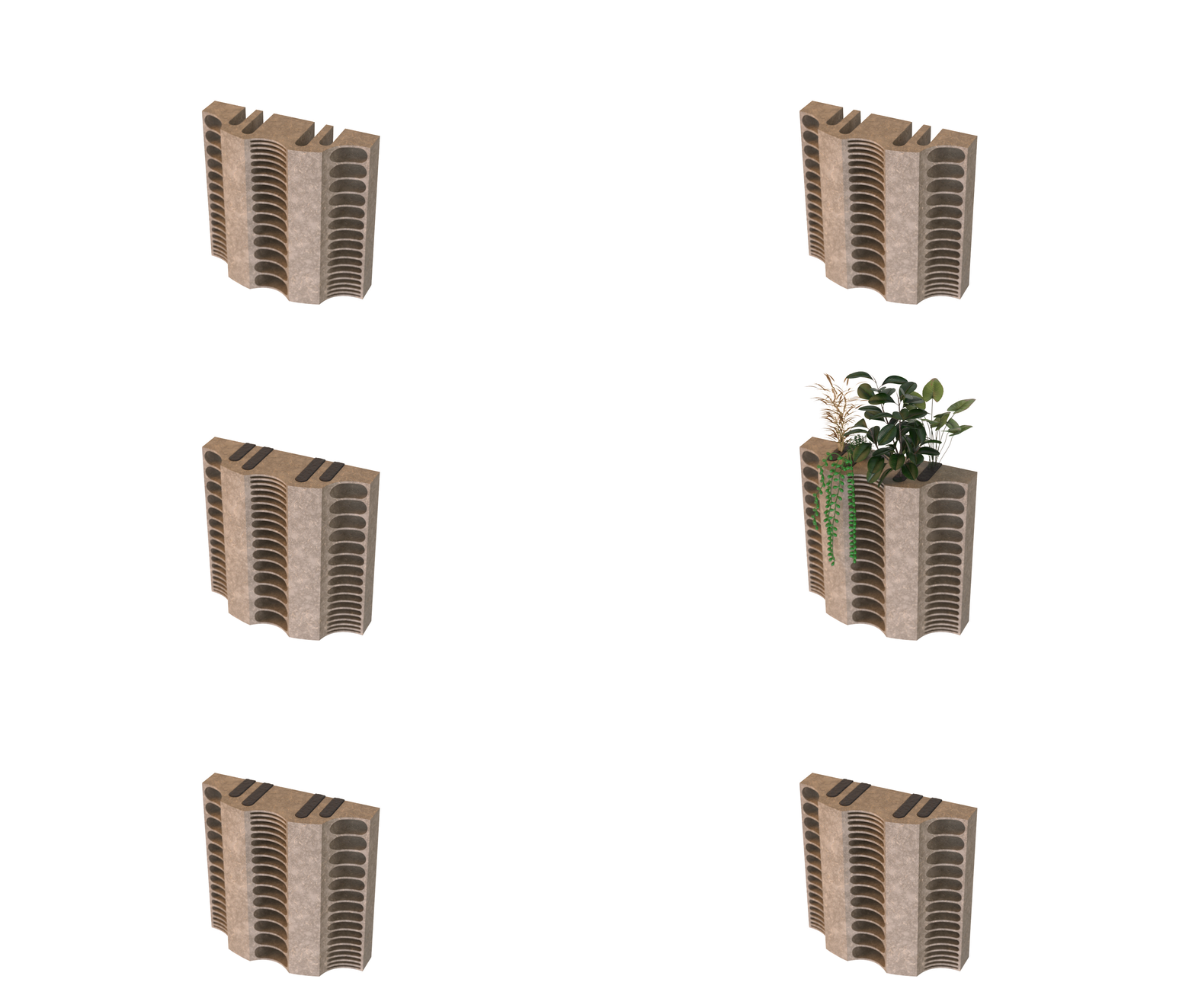
Mycelium Structure | Molded structure to bring back biodiversity in rivers and streams and to stop erosion


The mycelium starter requires high precision and may be prepared off-site, but can be easily shipped in a small envelope. All other steps can be carried out on site using local agricultural or bio-waste, preferably straw, which is low-impact and designed to biodegrade naturally in water.
The growth period is 2–7 days, followed by low-temperature heat treatment (95 °C) to stop further growth. Soil, seeds, or aquatic plants are added, and the units are placed along riverbanks to form stabilizing walls. Over time, nature takes over and enhances freshwater biodiversity.
This solution is suitable for:
In cities where concrete covers riverbanks
Rural areas with over-widened rivers and weak banks
Places where deforestation is an issue