PREGcare
20 weeks
University related project | Individual Thesis Project
”How might we help pregnant couples during their pregnancy to avoid tears during childbirth?”
My thesis project, PREGcare, was completed during my Master’s in Advanced Product Design at Umeå Institute of Design, in collaboration with Norrlands Universitetsjukhus, the Danish midwife network GynZone, and the Swedish doula network Föda Lugnt.
The project explored ways to improve childbirth in Scandinavia by preventing perineal tears and levator injuries. It empowers couples to take an active role, enhances maternal well-being, and fosters cooperation. PREGcare also questions current childbirth practices, emphasizing quality of life and envisioning a safer, more positive birth experience.


Background
Childbirth-related tears can be grouped into two main types: outer perineal tears and inner levator muscle injuries.
Perineal tears | Also reffered to as vaginal/sphincter injuries, affect about 80% of women, mostly mild (degree 1–2). Severe tears (degree 3–4) occur in around 6%. Risk factors include first-time birth, stress, overweight, and interventions like epidurals or suction-assisted labor. Consequences can be physical—pain, incontinence, prolapse—and mental, including depression, PTSD, and bonding difficulties.
Levator injuries | These injuries are less understood and even untreatable, affecting roughly 10% of women in Sweden. They are caused by poor baby positioning, maternal stress, and uterine tension. Outcomes are similar to severe perineal tears, with pain, loose perineum, and difficulty performing everyday activities.
Delimitations

process
77 online survey participants | 18 interview sessions | 3 observation visits | 2 workshops
Research | The research began with an online questionnaire, collecting 77 responses. I conducted 18 interviews with 9 mothers, 3 partners, 2 midwives, 3 doulas, and 1 midwife-doula in Stockholm, Skellefteå, and Umeå, as well as remotely due to Covid-19. Interviews with mothers and partners were conducted in participants’ homes to ensure a safe environment for discussing sensitive topics. I used journey mapping to document birthing experiences and concluded each session with a filmed recap.
Observations were carried out at three locations: the Umeå Birth Center, where I explored labor practices and training methods; Vårdvetarhuset, meeting an experienced midwife who demonstrated perineal support and training dolls; and a Profylax course on couple training, body exercises, breathing, and relaxation.
Ideation | The ideation phase began with a university workshop to test methods ahead of the co-creation workshop. In the workshop, participants mapped pregnancy and birth journeys to identify problems and opportunities, built on three draft ideas paired with personas, and learned from a midwife-doula about homebirth practices and natural pain relief. This process highlighted the active role of the body’s natural hormones and participation in labor.
"A disconnected brain and vulva may lead to tears and complications during childbirth. it is due to fear, stress and not knowing your own body"
Gry Senderowitz. Midwife, Prostatic engineer, Neurologist, Biochemist, Sexual health specialist, Author.
MAIN Problem areas

Goals and wishes

PRODUCT/APP PROTOTYPING & USER TESTING

Plastilina clay prototyping
UX/UIprototyping
I explored shapes, functions, and interactions through sketches and lo-fi clay prototypes. Form followed function, with an ergonomic, minimal, and non-intimidating expression.
In Rhino, I refined multiple versions, ensuring a cohesive form-DNA, alignment with the PREGcare mood board, and coordination with the app in shape, color, and overall expression.
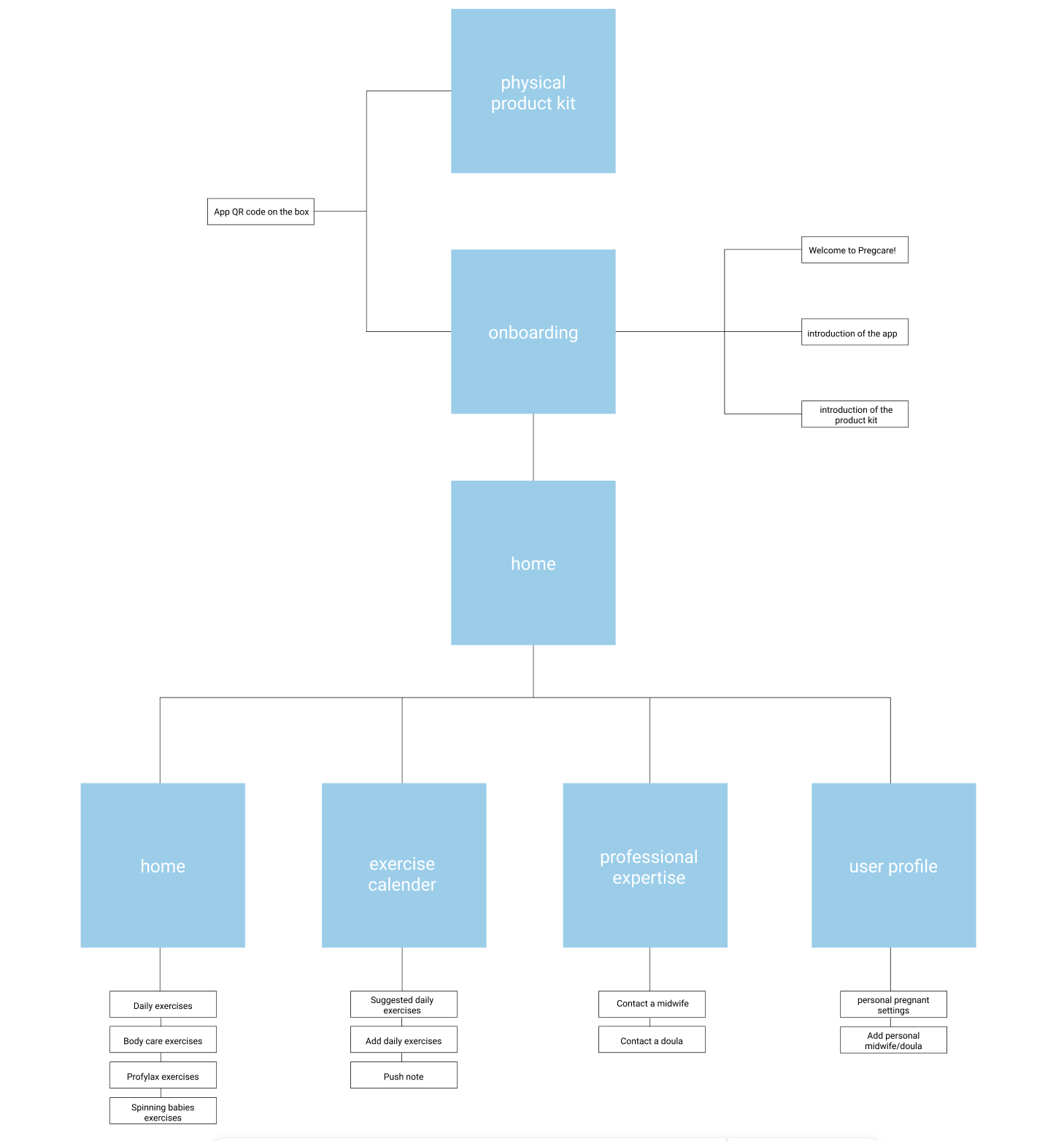
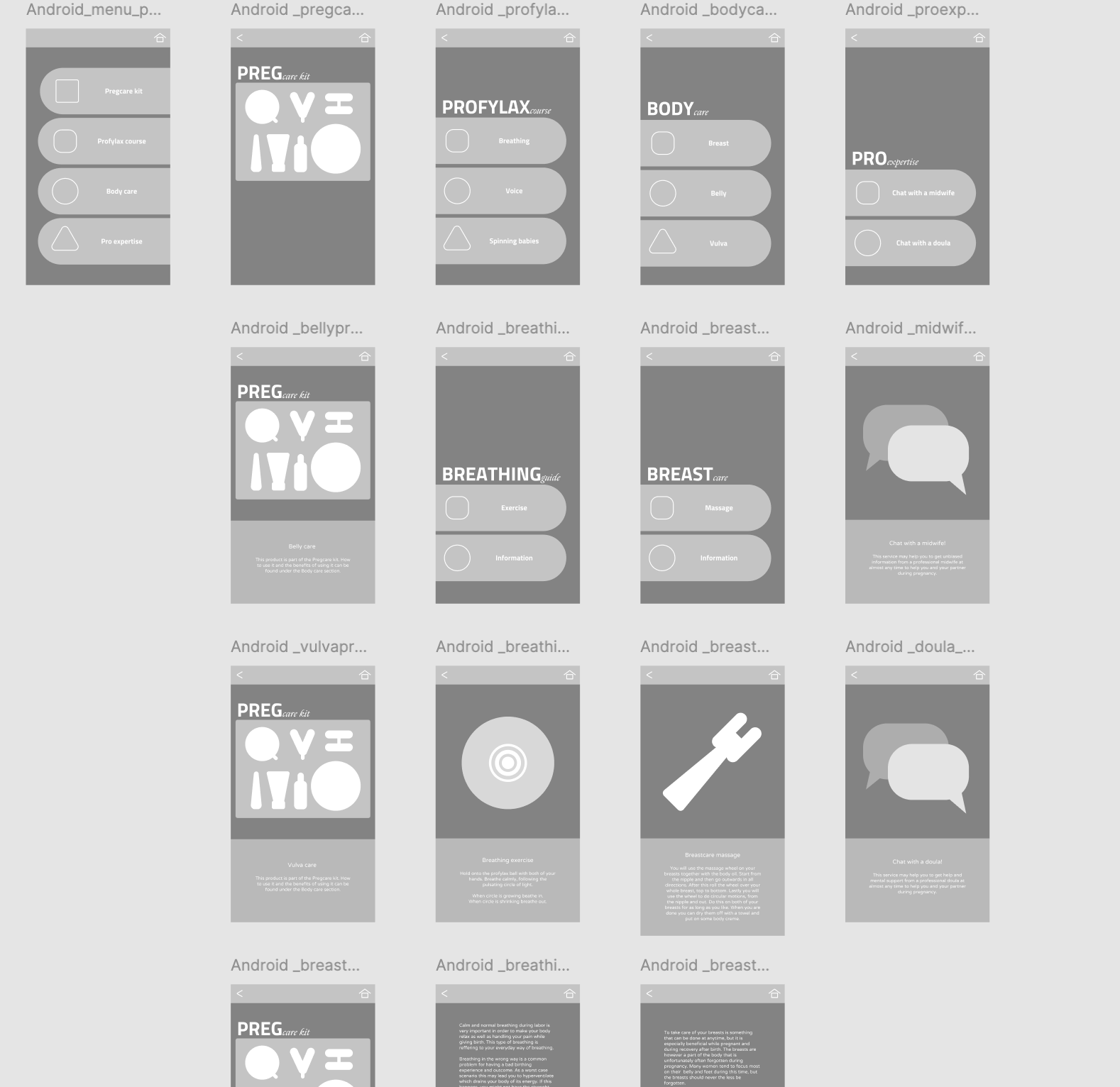
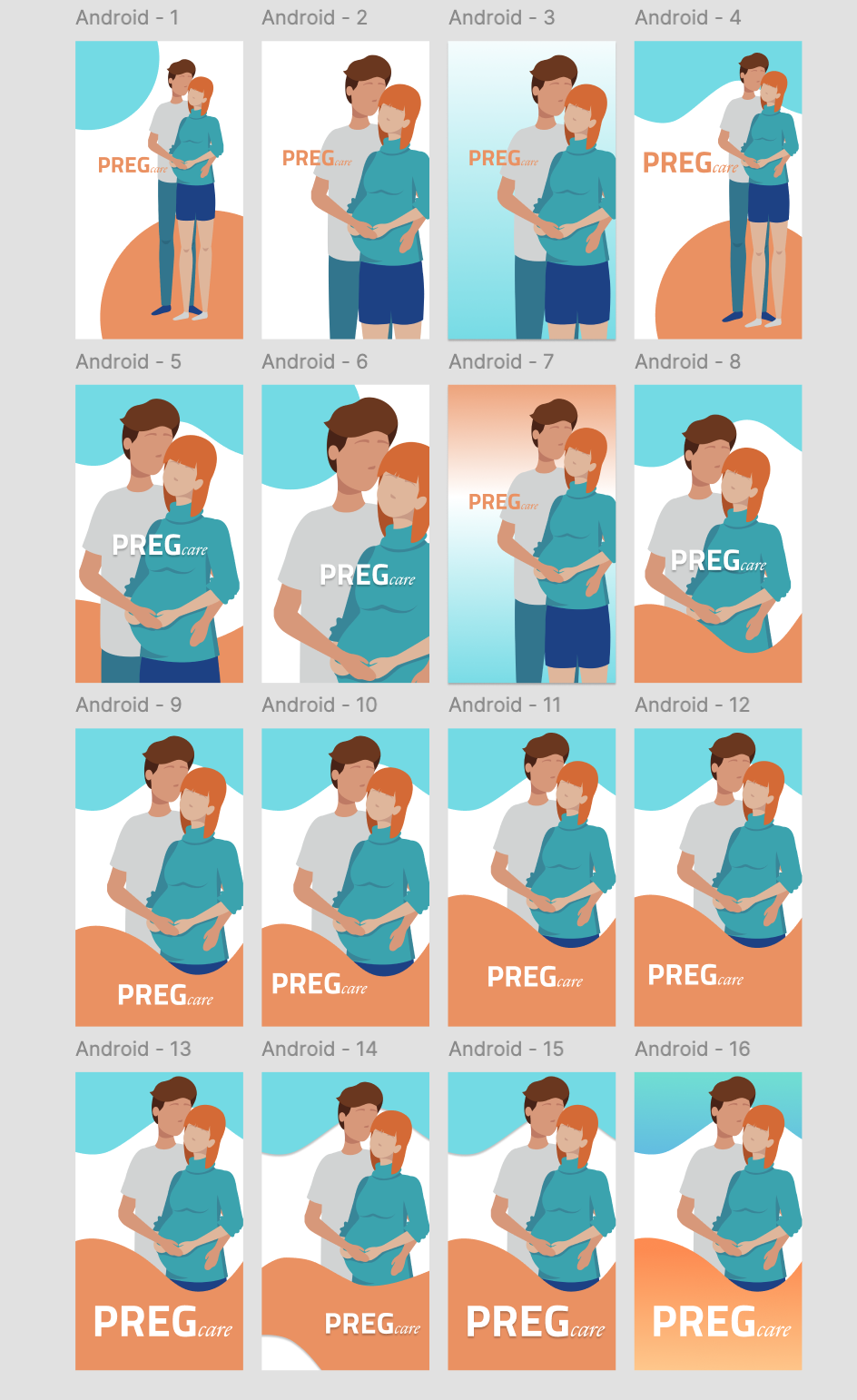
In Figma, I created a sitemap, wireframes, and explored visual styles to ensure the app complemented the kit’s products while remaining intuitive and user-friendly.
Due to Covid-19, all feedback and user testing were conducted remotely. I held seven sessions with three mothers and two industrial/UX designers.
User testing & feedback | Due to Covid-19, I had to do all of my feedback and user testings remotely. I had seven sessions in total, where I talked to three mothers and two industrial designers/UX designers. The plan from the beginning was to also involve some midwives and doulas, but due to covid19 and the heavy workload of the healthcare sector that was unfortunately not possible.
Concept idea

PREGcare kit


PREGcare | The final concept is a couple-focused body care and training package, including a physical kit and an app, designed to help prevent perineal tears and levator injuries. It offers three types of exercises: body care exercises to connect mind and body, profylax exercises for calm breathing and low-pitch humming, and app-based spinning babies exercises to optimize fetal positioning. The exercises emphasize couple cooperation and proactive preparation during pregnancy and labor, supporting a safer, more confident childbirth experience.
kit components

BELLYcare | Belly massage during pregnancy reduces anxiety, relieves muscle and joint pain, improves circulation, and supports mother and baby well-being. It helps couples bond and gently connect with the baby, especially after week 24. Movements should be light and circular. PREGcare also includes a modular handle with adjustable vibrations that can be attached to body care products for a safe and effective at-home treatment.

BREASTcare | Breast care during pregnancy and postpartum reduces swelling, soreness, and discomfort while supporting milk flow and breastfeeding. Massage helps release oxytocin and endorphins, easing pregnancy symptoms and promoting comfort. Postpartum, it can relieve clogged ducts, improve milk production, and strengthen breast muscles. Focus on gentle stimulation, mimicking a baby’s latch, and massaging one breast at a time, especially around the areola, for the best results.

VULVAcare | Vulva care and massage during pregnancy strengthen the nervous system connection between brain and vulva, helping reduce the risk of perineal tears. Exercises such as perineal, yoni, or pelvic massage can be done individually or with a partner, supporting bonding and preparation for childbirth. Massage also promotes oxytocin and endorphin release, relaxing the body and supporting a better birth outcome while enhancing intimacy and body awareness.

PROFYLAXexercises | Calm, controlled breathing during labor helps relax the body, manage pain, and reduce the risk of perineal tears. Exercises can be practiced during pregnancy alone, with a partner, or as guidance during labor. The profylax ball provides visual and haptic feedback, is waterproof, and can be used in water. Combining low-pitch voice with breathing further relaxes the body and vulva, improving comfort and readiness for childbirth.

App QR code in kit

Inductive charging in kit
pregcare app


PREGcare app overview in Figma Design
Onboarding

App content

Exercises & information
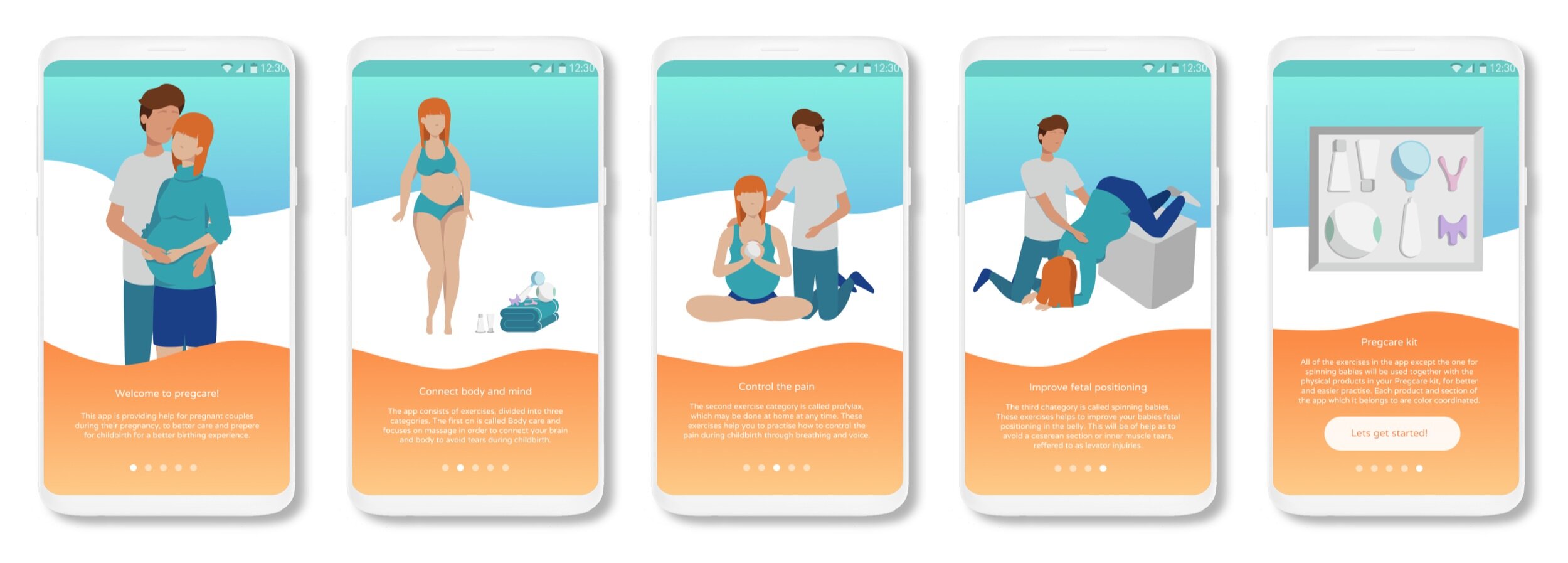
PREGcare app | The PREGcare app guides couples through body care, profylax, and spinning babies exercises, alongside in-depth information. First-time users receive an onboarding introduction to the kit and exercises. The app includes a home page with all exercises, a PREGcalendar for suggested daily routines, an EXPERTadvice page to connect with midwives or doulas, and a PROFILE page to personalize pregnancy status, baby position, and professional support. Exercise pages include short instructional videos and detailed guidance.